
You caught yourself in the mirror this morning and smiled. Straight, white, nothing chipped, nothing dark. And yet there’s that dull ache that shows up when you bite down on anything colder than room temperature. If your tooth looks fine but hurts, you’re not imagining it and you’re not alone. Every week, dentists in Cincinnati see patients who put off calling because “it doesn’t look like anything.” That’s exactly the trap.
When a Tooth Looks Fine but Hurts: What’s Really Going On
Most people assume a healthy-looking tooth is a healthy tooth. But the outside of a tooth can hide a surprising amount of trouble underneath. Enamel is dense and doesn’t always crack, stain, or crumble the way we expect, even when decay, a hairline fracture, or inflammation is already active a few millimeters below the surface.
A healthy-looking smile doesn’t always tell the whole story. In fact, many dental concerns stay hidden until they’re noticed in unexpected ways. If you’ve ever wondered why your smile looks different in photos even though everything feels normal, read our article “Think Your Smile Looks Fine? 7 Issues That Often Show Up in Your Holiday Photos.” It explains how subtle changes in your smile can reveal problems that aren’t obvious day to day.
The Problem: Pain Without a Visible Cause
A cavity that started between two teeth, a fracture line running under the gumline, or early gum disease pulling away from a tooth root can all cause real discomfort without ever showing up as a dark spot you’d notice at home. By the time a problem becomes visible to the naked eye, it has often been developing for months.
Why It Matters: Small Signs, Big Consequences
Tooth pain is your body’s early warning system, and it tends to be more reliable than a visual check in the mirror. Waiting for something to “look bad” before getting it checked usually means waiting until the problem has already reached the nerve, the bone, or a neighboring tooth.
Think of it the way you’d think about a strange sound coming from a car engine. The paint job still looks fine, the tires are fine, but something underneath is already working harder than it should. Ignore the sound long enough and a simple fix turns into a full repair. Teeth work the same way — the outer enamel can hold its shape and color long after the layers underneath have started to break down.
Tooth pain isn’t the only early warning sign your mouth can give you. Changes in enamel, gums, and even the way your teeth wear down can offer clues about your overall health long before other symptoms appear. Learn more in “What Your Teeth Reveal About Your Health (Dentists Notice This First).”
| Did You Know? Roughly a third of adults have had a cavity they never noticed until a dental exam caught it — usually because the decay was hiding between teeth or under an old filling, invisible from the front. |
Risks of Ignoring Silent Tooth Problems
Left unaddressed, a tooth that hurts but “looks fine” tends to follow a predictable pattern:
- Decay spreads deeper toward the nerve, turning a simple filling into a root canal.
- Small cracks widen with everyday chewing pressure, sometimes splitting the tooth.
- Gum inflammation progresses into bone loss around the tooth, affecting bite alignment.
- Infection can spread beyond the tooth, leading to swelling, fever, or an emergency visit.
- Treatment gets costlier and longer the later it’s caught — a filling becomes a crown, a crown becomes an extraction.
The Professional Solution: How a Cincinnati Dentist Finds What You Can’t See
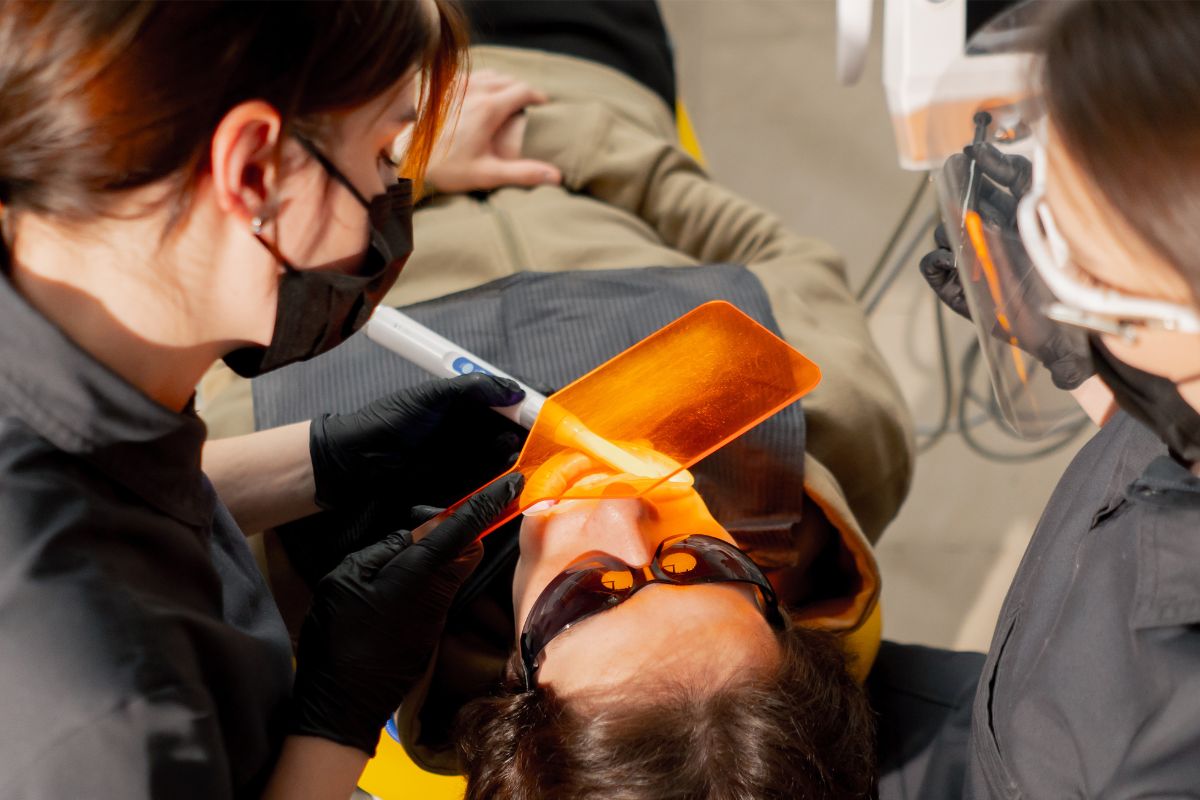
This is where a dental exam earns its value. Diagnostic tools like digital X-rays, bite testing, and careful probing around the gumline can reveal decay, fractures, or nerve irritation that are completely invisible during a mirror check at home. A dentist near you isn’t just looking — they’re testing, measuring, and comparing what they see today against your dental history.
Why Does a Tooth Hurt If It Looks Healthy?
A tooth can hurt without visible damage because decay, cracks, or infection often start beneath the enamel or between teeth, out of sight. Pain is frequently the first real sign, appearing before any visual change is noticeable.
Symptom-to-Cause Quick Reference
| Symptom | Possible Cause | Urgency |
| Sharp pain when biting down | Hidden crack or fractured filling | See a dentist soon |
| Lingering sensitivity to cold | Enamel wear or early decay near the nerve | Schedule within 1–2 weeks |
| Dull ache between two teeth | Cavity forming in a hard-to-see contact area | Schedule within 1–2 weeks |
| Tenderness when flossing | Early gum inflammation or bone loss | Schedule within 1–2 weeks |
| Throbbing, constant pain | Infection reaching the nerve | Seek care right away |
| Pain that comes and goes with no pattern | Bite misalignment or referred sinus pressure | Schedule an evaluation |
Restorative Dentistry in Cincinnati
Forest Hills Family Dentistry has treated Cincinnati families from the Nimitzview Drive office for decades, which means patients aren’t just getting a diagnosis, they’re getting it from a team that has seen how local habits, diets, and even municipal water fluoridation levels affect long-term tooth wear across the area. Whether the concern turns out to be a cavity, a cracked filling, or something needing a dental crown, the plan is built around keeping the natural tooth whenever it’s reasonably possible.
Patients coming from Anderson Township, Mount Washington, and other nearby Cincinnati neighborhoods often mention the same thing: they waited because nothing looked wrong, and they wish they’d come in sooner. A local practice that has treated multiple generations of the same families tends to recognize patterns, which symptoms are worth watching and which ones warrant same-week attention — faster than a first-time evaluation might.
Patient Trust & Experience
Patients often come in expecting the worst and leave relieved that the fix was smaller than they feared — precisely because the problem was caught early.
Meet Your Dentists

Dr. Jared Martin of Forest Hills Family Dentistry believes that the best dental care starts with listening. He takes a thorough, patient-focused approach to diagnosing concerns like hidden decay, cracked teeth, and unexplained tooth pain, using modern diagnostic technology to identify problems before they become more serious. Whether you need a simple filling or a more advanced restorative treatment, Dr. Martin focuses on preserving your natural teeth whenever possible while helping you feel informed and comfortable every step of the way. Schedule an appointment!
Signs You Should Book a Checkup This Week
- Pain when chewing that shows up in the same spot every time.
- Cold or sweet sensitivity that lingers more than a few seconds.
- Tenderness or bleeding around one specific tooth when you brush or floss.
- A dull, low-grade ache that comes and goes but never fully disappears.
- Discomfort that started after a hard bite, a fall, or grinding your teeth.
Related Services Worth Exploring
If an exam confirms decay or a fracture, treatment usually falls into one of two categories. Smaller areas of decay are typically addressed with a filling, while more significant damage or a cracked tooth may call for a dental crown to protect what’s left of the natural structure. For anyone still searching for a dentist near you in the Cincinnati area, a general checkup is the right place to start before deciding between these options.
| A Healthy-Looking Tooth Deserves a Second Opinion Book an exam with Forest Hills Family Dentistry and get a clear, honest answer about what’s causing your discomfort. Call us to schedule an appointment! |
Frequently Asked Questions
1. Can a tooth hurt without any visible damage?
Yes. Decay, cracks, and early infection often begin beneath the enamel or between teeth, where they aren’t visible during a mirror check but can still cause real, ongoing pain.
2. Why does my tooth hurt only when I chew?
Pain that appears specifically when biting down often points to a hidden crack, a loose filling, or pressure on an already-inflamed nerve.
3. Is tooth sensitivity to cold always a cavity?
Not always. Cold sensitivity can also result from worn enamel, exposed tooth roots, or receding gums. However, because early tooth decay can cause the same symptom, it’s best to have it evaluated by a dentist.
4. How long can a hidden cavity go untreated?
It varies from person to person, but tooth decay generally progresses over time. What starts as a small cavity can eventually reach the tooth’s nerve if left untreated, leading to more complex treatment.
5. What happens during a dental exam for unexplained tooth pain?
Your dentist will review your symptoms, examine the affected tooth, take digital X-rays if needed, test the tooth’s response to temperature or pressure, and evaluate the surrounding gums to identify the underlying cause.
6. Will I need a filling or a crown?
That depends on the extent of the damage. Smaller areas of decay are often treated with a tooth-colored filling, while larger cavities or cracked teeth may require a dental crown to restore strength and function.
7. Is it normal for tooth pain to come and go?
Intermittent tooth pain isn’t uncommon, but it shouldn’t be ignored. Even if the discomfort comes and goes, it may indicate an underlying issue that can worsen over time without treatment.
8. How do I find a dentist near me in Cincinnati for a same-week exam?
Many local dental practices, including Forest Hills Family Dentistry, offer same-week appointments for patients experiencing tooth pain or discomfort. Calling the office or requesting an appointment online is often the quickest way to be seen.