
How Dental Bridges Work and What You Should Know
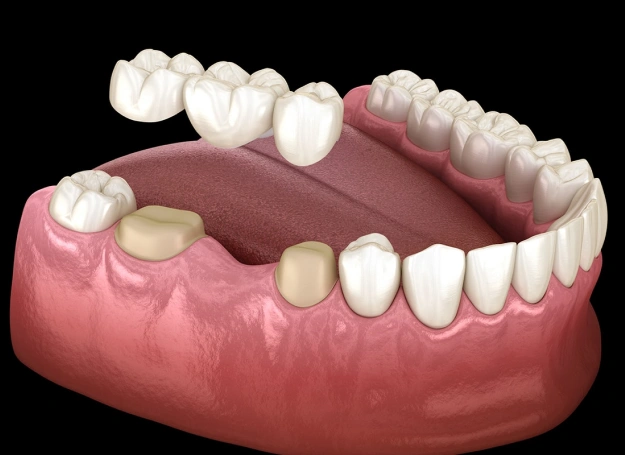
Whenever you drive across a bridge, you're being supported by the same principles that support a dental bridge. Crowned teeth on either side of a space are called abutments. They support an artificial tooth, called a pontic. While a bridge lasts for many years, sometimes the strain of supporting one or more missing teeth can cause the abutments themselves to weaken and may lead to more missing teeth.
A Better Bridge
In many cases, dental implants offer a better alternative, eliminating most of the load-bearing strain you see in traditional bridge abutments. When carefully placed in the bone, an implant mimics the root of a tooth. They bear the load that the natural teeth used to hold, sparing the neighboring teeth from excessive forces. In some cases, two implants may be used to build a bridge.
Our doctors know how to bring the puzzle pieces together to fit any scenario regardless of the scope of your treatment.
Porcelain Bridges Can Crack Under Pressure or Trauma
Dental bridges are typically made with a metal framework covered in porcelain or ceramic. While generally durable, these materials can weaken over time with poor oral hygiene. Like natural teeth, dental bridges can also chip or crack under pressure or injury.
Materials Used in Porcelain Bridges
Traditional bridges are the most commonly used type of dental bridge, typically made from porcelain fused to metal or all-ceramic materials. Porcelain remains the most popular choice for crafting both crowns and bridges due to its durability and natural appearance.